Lobuche Peak Climbing
February 24, 2026 | admin
Complete Lobuche Peak climbing guide with itinerary, cost, permits, difficulty & FAQs for your 6,119m Himalayan summit adventure.
If you want to step beyond trekking and experience real Himalayan mountaineering without attempting an 8,000-meter giant, Lobuche Peak climbing is one of the best choices in Nepal.
Located in the Everest region, Lobuche Peak offers a perfect introduction to technical alpine climbing. It combines the classic Everest Base Camp trekking route with a 6,000+ meter summit that demands proper mountaineering skills.
What Is Lobuche Peak?
Lobuche Peak lies in the Khumbu region of Nepal, near Everest Base Camp.
Two Peaks of Lobuche
- Lobuche East (6,119 meters) – Most climbed
- Lobuche West (6,145 meters) – More technical and requires an expedition permit
Most commercial climbing trips focus on Lobuche East.
Summit Views
From the summit, climbers enjoy panoramic views of:
- Mount Everest
- Lhotse
- Nuptse
- Ama Dablam
- Pumori
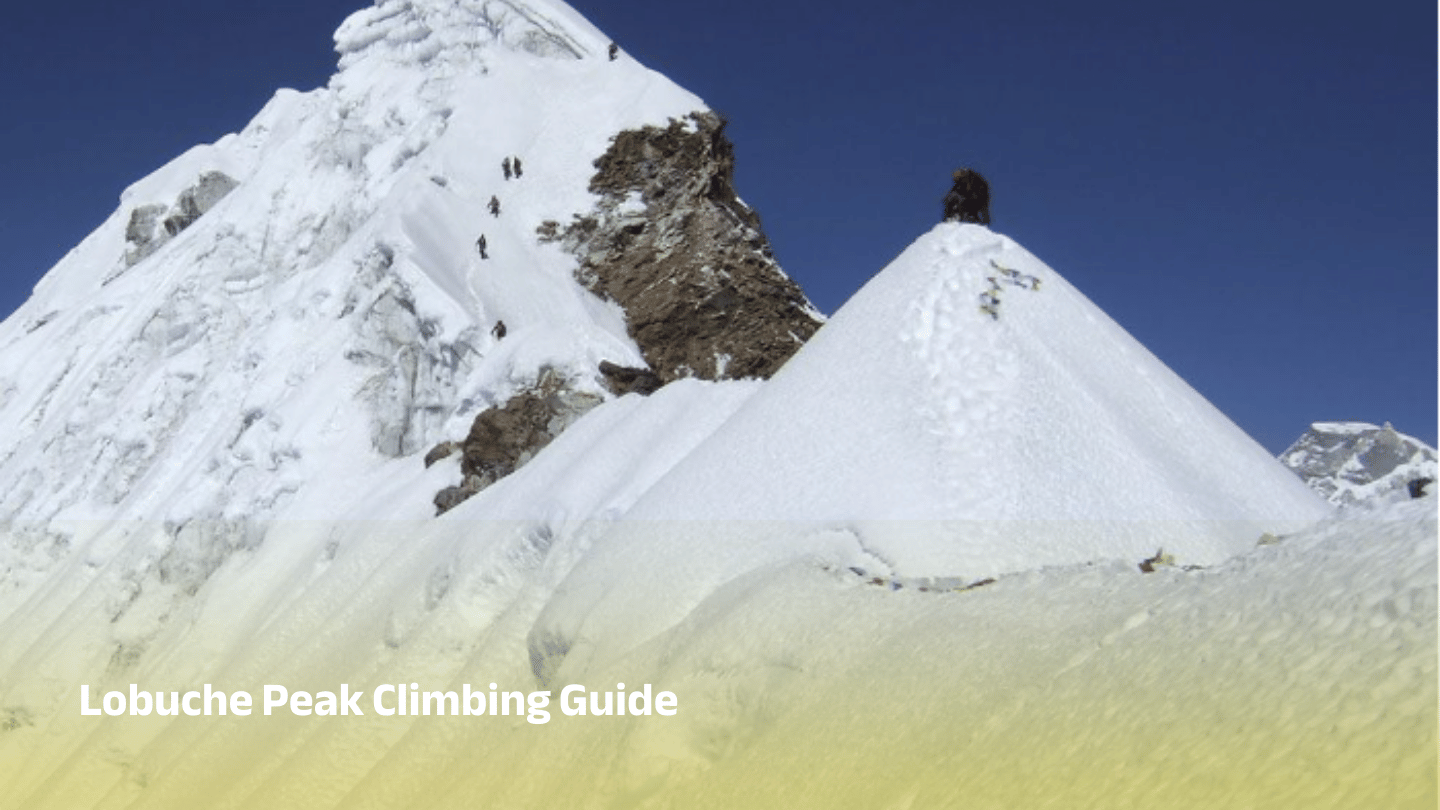
The summit ridge is narrow and dramatic, offering one of the most rewarding 6,000-meter climbs in Nepal.
Why Choose Lobuche Peak Climbing?
- Combines Everest Base Camp trek with peak climbing
- Suitable for climbers with basic mountaineering experience
- Offers real glacier and rope climbing experience
- Less crowded than Island Peak
- Provides spectacular Everest views
If you want a stepping stone before attempting higher mountains, Lobuche is an excellent choice.
Lobuche Peak Climbing Difficulty
Lobuche East is classified as a trekking peak, but it should not be underestimated.
Difficulty Level
- Moderate to challenging
- Requires good physical fitness
- Basic mountaineering skills needed
Equipment Used During Climb
- Crampons
- Ice axe
- Fixed ropes
- Harness
- Ascender (Jumar)
The summit section includes steep snow and ice slopes up to 45–50 degrees.
Lobuche Peak Itinerary (18–21 Days)
Standard 19-Day Itinerary
- Day 1: Arrival in Kathmandu
- Day 2: Preparation and permit processing
- Day 3: Flight to Lukla and trek to Phakding
- Day 4: Trek to Namche Bazaar
- Day 5: Acclimatization in Namche
- Day 6: Trek to Tengboche
- Day 7: Trek to Dingboche
- Day 8: Acclimatization in Dingboche
- Day 9: Trek to Lobuche
- Day 10: Trek to Gorakshep and Everest Base Camp
- Day 11: Climb Kala Patthar and return to Lobuche
- Day 12: Trek to Lobuche Base Camp
- Day 13: Climb to High Camp
- Day 14: Summit Lobuche Peak and return to Base Camp
- Day 15–17: Trek back to Lukla
- Day 18: Fly to Kathmandu
- Day 19: Departure
The itinerary includes proper acclimatization to reduce altitude sickness risk.
Lobuche Peak Climbing Cost
The cost varies depending on group size and services.
Average Cost Range
USD 2,800 – 5,500 per person
Cost Includes
- Peak climbing permit
- Sagarmatha National Park permit
- TIMS card
- Domestic flights (Kathmandu–Lukla–Kathmandu)
- Guide and porter
- Accommodation
- Meals during trek
- Climbing equipment (group gear)
Additional Personal Costs
- Climbing gear rental
- Travel insurance
- Personal equipment
- Tips
- Extra nights
Spring season is slightly more expensive due to high demand.
Permits Required for Lobuche Peak
- Lobuche Peak climbing permit (issued by Nepal Mountaineering Association)
- Sagarmatha National Park entry permit
- Khumbu Rural Municipality permit
Seasonal Permit Variation
- Spring: Higher
- Autumn: Moderate
- Winter and Summer: Lower
Always confirm updated rates before booking.
Best Time for Lobuche Peak Climbing
Recommended Seasons
- Spring (March–May)
- Autumn (September–November)
Why These Seasons?
- Clear weather
- Stable climbing conditions
- Good summit success rate
Winter climbing is possible but extremely cold. Monsoon season is not recommended.
Accommodation During Lobuche Peak Climb
During Trekking
Teahouse lodges
At Higher Altitude
Camping at Base Camp and High Camp
Expect basic but comfortable accommodation in the Everest region.
Training Required Before Climbing Lobuche Peak
- Cardio training
- Strength training
- Hiking with backpack
- Basic mountaineering course
- Ice axe and crampon practice
Prior trekking above 4,000 meters is highly recommended.
Is Lobuche Peak Climbing Safe?
Yes, when organized by a licensed climbing company.
Safety Depends On
- Proper acclimatization
- Experienced guides
- Weather conditions
- Physical preparation
Altitude sickness is the primary risk. Follow guide instructions strictly.
Lobuche Peak vs Island Peak
Lobuche Peak
- More technical
- Steeper summit ridge
- Less crowded
Island Peak
- More popular
- Slightly less technical
- Higher traffic
Many climbers prefer Lobuche for its dramatic summit experience.
Who Should Climb Lobuche Peak?
Ideal For
- Adventurous trekkers
- Aspiring mountaineers
- Everest Base Camp trekkers wanting more challenge
- Climbers preparing for higher Himalayan expeditions
Not Suitable For
- Complete beginners
- People with no high-altitude experience
Final Thoughts
Lobuche Peak climbing offers the perfect balance between trekking and real Himalayan mountaineering. It challenges you physically, rewards you visually, and prepares you for bigger climbs in the future.
With breathtaking Everest views, a technical summit ridge, and the thrill of high-altitude achievement, Lobuche Peak stands among Nepal’s best trekking peaks.
If you are ready to step beyond trekking and enter the world of mountaineering, Lobuche Peak might be your ideal next adventure.
Frequently Asked Questions
Lobuche Peak Climbing FAQs
1. How difficult is Lobuche Peak climbing?
It is moderately challenging and requires basic mountaineering skills.
2. What is the height of Lobuche Peak?
Lobuche East is 6,119 meters above sea level.
3. How much does Lobuche Peak climbing cost?
It typically costs between USD 2,800 and 5,500.
4. Do I need prior climbing experience?
Basic mountaineering experience is recommended but not mandatory with guided support.
5. Is Lobuche Peak harder than Island Peak?
Yes, it is considered slightly more technical.
6. What permits are required?
Lobuche Peak permit, Sagarmatha National Park permit, and local municipality permit.
7. How long does Lobuche Peak climbing take?
Usually 18–21 days including trekking and acclimatization.
8. What is the best season?
Spring and Autumn offer the best weather conditions.
9. Is altitude sickness common?
It can occur. Proper acclimatization minimizes risk.
10. Can beginners climb Lobuche Peak?
Beginners with strong fitness and professional guide support can attempt it.
11. What equipment is required?
Crampons, ice axe, harness, helmet, mountaineering boots, and ropes.
12. Is travel insurance required?
Yes, insurance covering high-altitude rescue is mandatory.