Mount Everest Climbing Nepal
March 14, 2026 | admin
Guide to Mount Everest climbing in Nepal including expedition route, permit fees for Nepali and foreigners, cost, preparation.
Climbing Mount Everest in Nepal is one of the greatest challenges and achievements in the world of mountaineering. Standing at 8,848.86 meters, Mount Everest is the highest mountain on Earth and has attracted climbers and adventurers from around the globe for decades.
Each year hundreds of climbers attempt the Mount Everest climbing expedition in Nepal through the famous South Col route, which starts from Everest Base Camp in the Khumbu region. While reaching the summit is an extraordinary achievement, the journey requires extensive preparation, professional support, and significant financial investment.
This guide explains everything about Mount Everest climbing in Nepal, including expedition routes, permit fees for Nepali and foreign climbers, costs, preparation, and important rules followed by mountaineers.
Where Is Mount Everest Located?
Mount Everest lies in the Himalayan mountain range on the border between Nepal and Tibet (China).
- Height: 8,848.86 meters
- Location: Mahalangur Himal subrange of the Himalayas
- Region in Nepal: Sagarmatha National Park, Khumbu
In Nepal, Everest is known as Sagarmatha, while Tibetans call it Chomolungma, meaning “Goddess Mother of the World.”
Can You Climb Mount Everest from Nepal?
Yes, climbers can climb Mount Everest from Nepal, and this is the most popular route to reach the summit.
The South Col route from Nepal is considered the classic route used by most expeditions. It begins at Everest Base Camp and passes through several camps before reaching the summit.
Major climbing stages include:
- Everest Base Camp (5,364 m)
- Camp I (6,065 m)
- Camp II (6,400 m)
- Camp III (7,200 m)
- Camp IV – South Col (7,900 m)
- Everest Summit (8,848.86 m)
This route requires crossing the famous Khumbu Icefall, one of the most dangerous sections of the climb.
Mount Everest Climbing Expedition in Nepal
A typical Mount Everest climbing expedition takes around 60 to 70 days.
The expedition includes several stages:
- Acclimatization at Everest Base Camp
- Rotation climbs between high camps
- Summit attempt during favorable weather
Climbers must gradually adapt to the high altitude before attempting the summit.
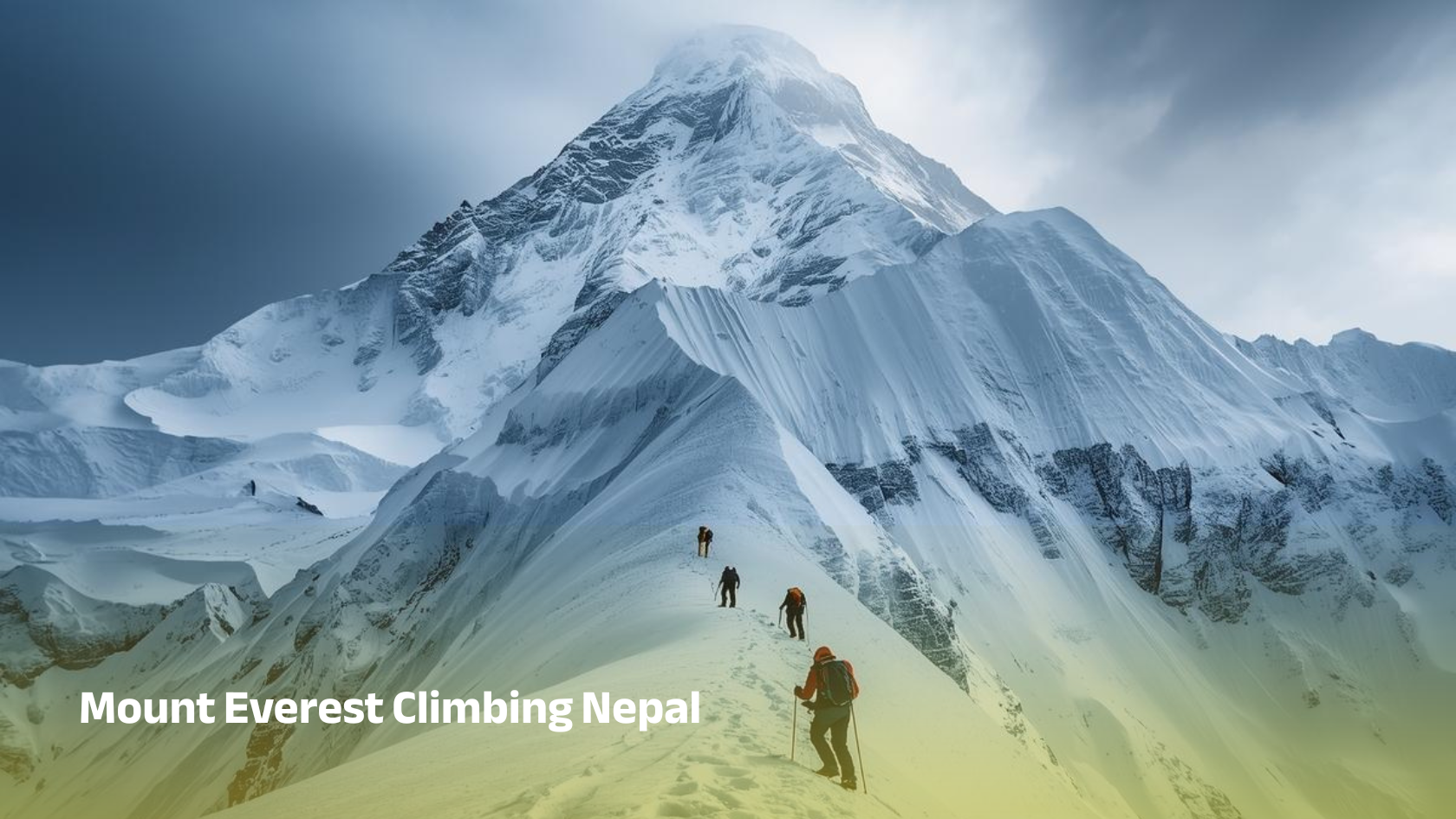
Mount Everest Climbing Route from Nepal
The South Col route includes several challenging sections.
- Khumbu Icefall – dangerous glacier movement area
- Western Cwm – large glacier valley
- Lhotse Face – steep icy slope
- South Col – final camp before summit
- Hillary Step area near summit ridge
Each section requires strong climbing skills and endurance.
Nepal Mount Everest Climbing Fee
The Nepal government charges a climbing permit fee for Everest expeditions.
Permit fees vary for foreigners and Nepali climbers.
Everest Climbing Permit Fee for Foreigners
Foreign climbers must pay a permit fee to the Government of Nepal.
- Spring season permit: 11,000 USD per person
- Autumn season permit: Approximately 5,500 USD
- Winter and monsoon season: Around 2,750 USD
Spring is the most popular climbing season.
Everest Climbing Fee for Nepali Climbers
Nepali climbers pay a lower permit fee.
Permit fee for Nepali climbers:
Approximately 75,000 Nepalese Rupees
However, expedition costs still include equipment, guides, and logistics.
Total Cost of Mount Everest Climbing Expedition
The total cost of climbing Everest is much higher than the permit fee.
Typical expedition expenses include:
- Climbing permits
- Sherpa guides and support team
- Oxygen cylinders
- Climbing equipment
- Transportation and logistics
- Food and accommodation at base camp
Average cost estimates:
- Budget expedition: 30,000 USD
- Standard expedition: 40,000 to 60,000 USD
- Luxury expedition: 70,000 USD or more
Best Time to Climb Mount Everest
The best seasons for Everest climbing are:
Spring (April to May)
This is the main climbing season with stable weather and favorable summit windows.
Autumn (September to October)
Less crowded but weather conditions can be less predictable.
Most climbers choose the spring season.
The 2 PM Rule on Everest
One of the most important safety rules followed by climbers is the “2 PM rule.”
This rule states:
Climbers must turn around and descend if they have not reached the summit by 2 PM.
After this time, weather conditions become more dangerous and descending in darkness at extreme altitude can be life-threatening.

Preparation Required for Mount Everest Climbing
Climbing Mount Everest requires years of preparation.
- High-altitude mountaineering experience
- Technical climbing training
- Physical endurance training
- Proper climbing equipment
- Experienced guides and Sherpa support
Many climbers first climb peaks like Ama Dablam, Island Peak, or Cho Oyu before attempting Everest.
Risks of Climbing Mount Everest
Although Everest climbing is better organized today, it remains extremely dangerous.
- Extreme altitude and oxygen shortage
- Avalanches and icefall dangers
- Severe weather conditions
- Altitude sickness
Proper preparation and experienced guides help reduce risks.
Why Mount Everest Is the Ultimate Climbing Challenge
Climbing Everest is considered the ultimate goal for many mountaineers.
- Highest mountain in the world
- Extreme physical and mental challenge
- Prestigious mountaineering achievement
- Unique Himalayan adventure
For many climbers, reaching the summit is a once-in-a-lifetime dream.
How Many Nepalese Have Climbed Mount Everest?
Nepali climbers, especially Sherpas, hold the highest number of Everest summits.
Thousands of Nepali mountaineers have successfully climbed Everest since the first ascent in 1953.
Sherpa climbers play a crucial role in supporting international expeditions and guiding climbers safely to the summit.
Can Beginners Climb Mount Everest?
Mount Everest is not suitable for beginners.
Before attempting Everest, climbers must gain experience on smaller peaks and other high-altitude mountains.
Most climbers spend years developing mountaineering skills before attempting Everest.
Conclusion
Climbing Mount Everest in Nepal remains one of the greatest achievements in mountaineering. The journey demands determination, professional preparation, financial investment, and strong expedition support.
For experienced climbers ready to face the challenge, the Mount Everest climbing expedition in Nepal offers an unforgettable adventure and the rare opportunity to stand on the highest point on Earth.
Frequently Asked Questions
Can you climb Mount Everest from Nepal?
Yes, the South Col route in Nepal is the most common way to reach the summit.
What is the permit fee for climbing Everest in Nepal?
Foreign climbers pay around 11,000 USD for the climbing permit.
How much does it cost to climb Mount Everest?
The total cost usually ranges between 30,000 and 70,000 USD.
How long does an Everest expedition take?
Most expeditions take around 60 to 70 days.
What is the 2 PM rule on Everest?
Climbers must turn back if they do not reach the summit by 2 PM.
How high is Mount Everest?
Mount Everest stands at 8,848.86 meters above sea level.
Can beginners climb Mount Everest?
No, climbers must have extensive mountaineering experience.
How many camps are on the Everest route?
There are four main camps above Everest Base Camp.
When is the best time to climb Everest?
Spring (April–May) is the best climbing season.
How many people climb Everest each year?
Hundreds of climbers attempt the summit annually.
How many Nepalese have climbed Everest?
Thousands of Nepali climbers, especially Sherpas, have reached the summit.
Is Everest climbing dangerous?
Yes, climbers face risks such as altitude sickness and avalanches.
Do climbers use oxygen on Everest?
Yes, most climbers use supplemental oxygen above high camps.
How long does the summit push take?
The summit push from Camp IV usually takes 10 to 15 hours.
Why is Everest so difficult to climb?
Extreme altitude, harsh weather, and technical terrain make the climb challenging.